
Branding is often described as a creative process. In practice, it’s a decision-making process.
Organizations rarely begin by asking, “What should our logo look like?” More often, they’re responding to growth, change, or opportunity. The business has evolved, but the brand no longer reflects where the organization is today. Those moments often lead to a familiar question: Where should we start? The answer is rarely with design.
Branding is more than design
Branding is often associated with logos and visual identity, but those are only part of the picture.
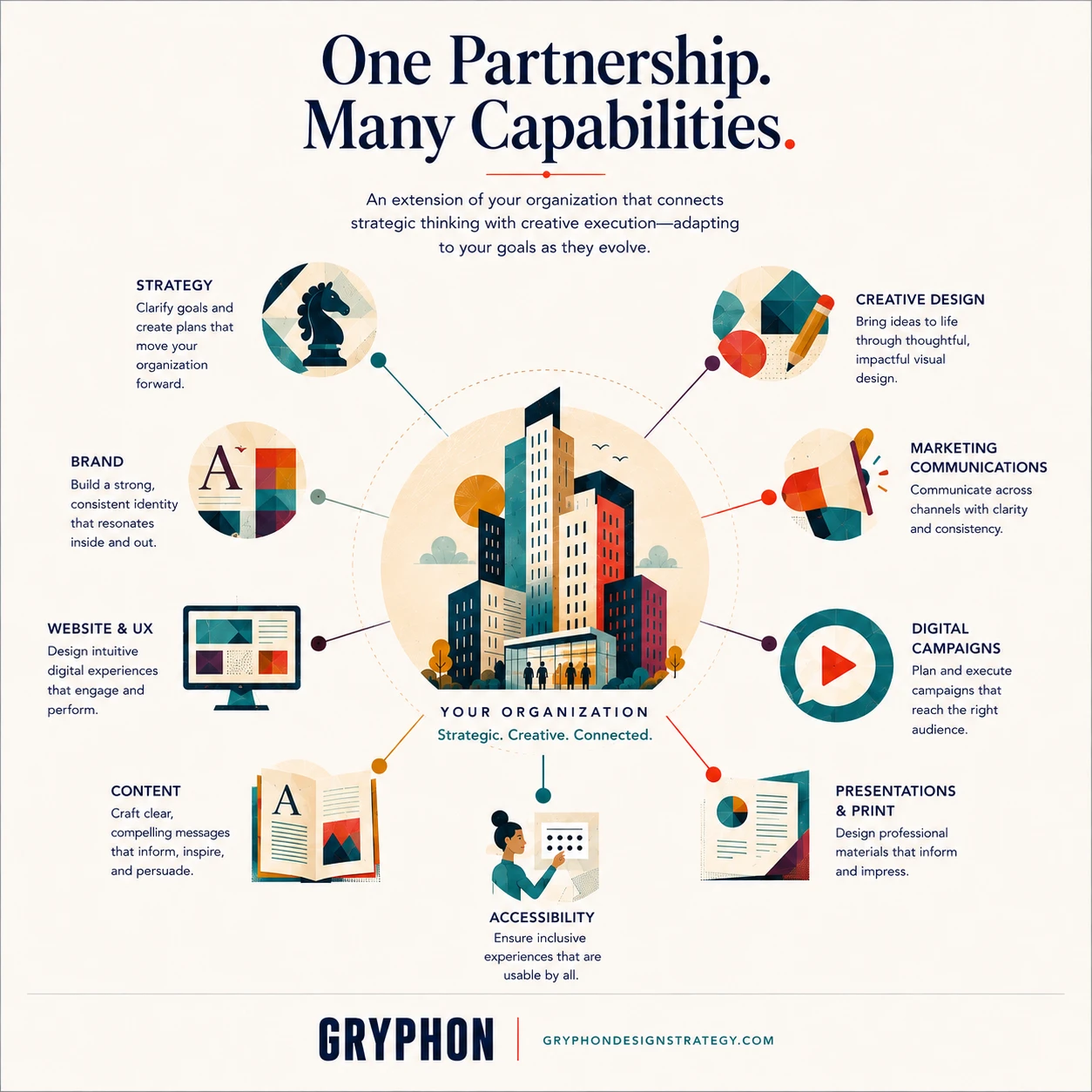
A strong brand is built through many connected experiences—from messaging and websites to presentations, marketing communications, digital products, and customer interactions. The strongest brands are built when those experiences reinforce one another.
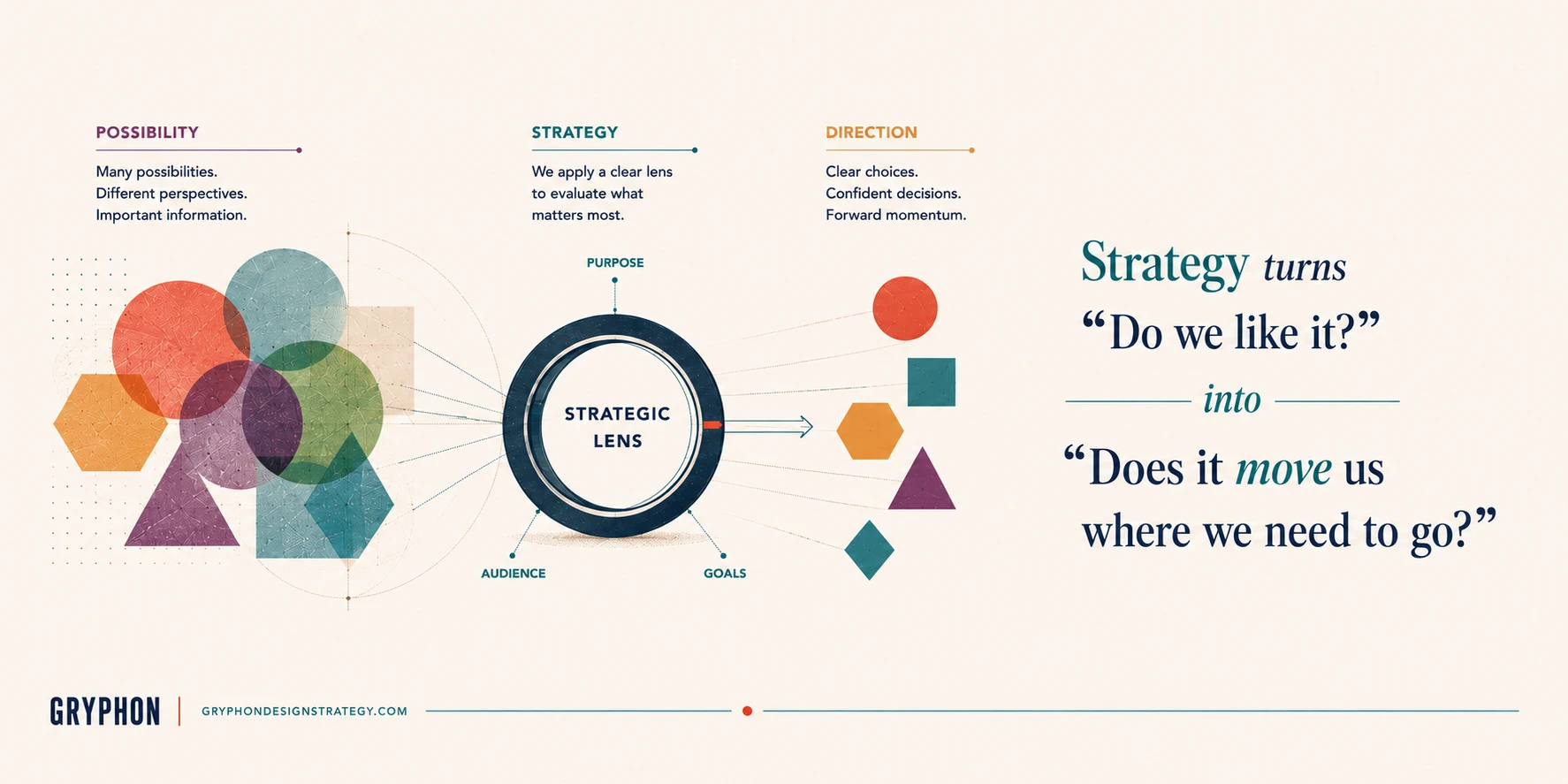
Why strategy must lead every design decision
Every element of a brand communicates something. Names, language, messaging, typography, color, imagery, websites, presentations, and digital experiences all shape how an organization is perceived.
Brand strategy creates alignment before creative work begins. It clarifies who you serve, what differentiates your organization, what you want to be known for, and how your brand should evolve as your organization grows. Without that foundation, creative decisions often become subjective. Teams spend time debating preferences instead of evaluating whether the work supports organizational goals.
Strategy gives design direction.
AI is changing the process—not the purpose
Artificial intelligence can accelerate research, organize information, generate ideas, and help teams explore possibilities more efficiently.
What AI cannot replace is judgment. Successful brands reflect organizational context, business priorities, culture, and long-term vision.
AI expands possibilities. Judgment creates distinction.
Refresh or rebrand?
Organizations often assume they need a complete rebrand when something feels out of alignment. Frequently, they don’t.
Many organizations have strong brand equity. The opportunity is not always to start over, but to understand what is working, what is not, and what needs to evolve. A brand refresh strengthens and modernizes an existing identity while preserving the equity that’s already been earned. A rebrand takes a broader look at positioning, messaging, identity, and experience.
The right answer begins with understanding—not assumptions.
Our approach
Every Gryphon engagement begins with understanding.
Before recommending services or deliverables, we learn about the organization, its audience, its goals, and the decisions that brought it to this moment. That understanding helps determine whether the right path is a comprehensive brand strategy, focused messaging, a website, a brand evolution, ongoing creative support through our Virtual Design Team™, or simply strengthening what’s already working.
The goal isn’t change for its own sake. It’s making thoughtful decisions that build clarity, consistency, and lasting value.
Ready to move forward with greater clarity?
Every organization reaches important moments where its brand needs to catch up with its business. If you’re considering a brand refresh, planning a new website, or simply looking for an experienced perspective, we’d be happy to start a conversation.
FIELD NOTE
Before changing your brand, write down what has changed in your organization first. A new audience? A new market? Different services? New leadership? A shift in how customers find you? Then ask a second question: What is still working? Those two lists can tell you a surprising amount about whether you need a refresh, a rebrand, or simply a clearer strategy.